
No products in the cart.

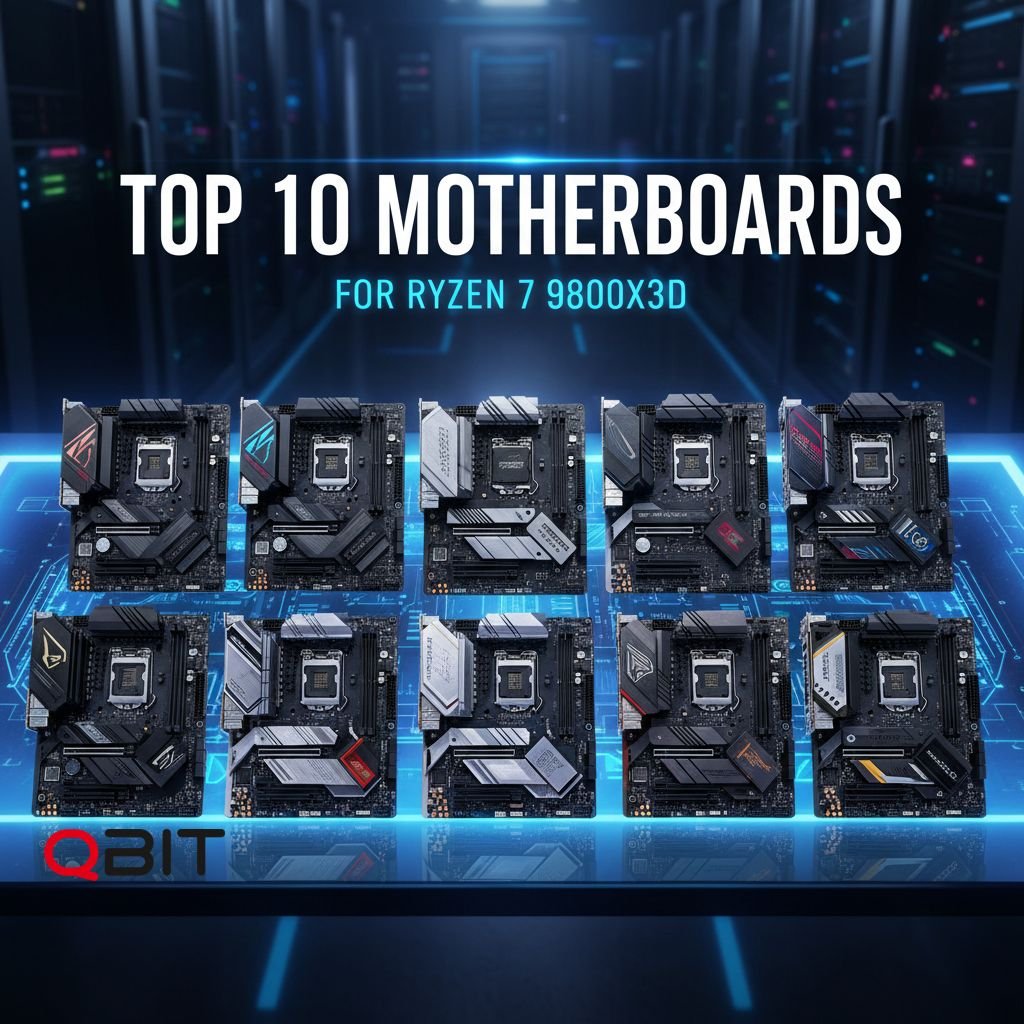
Top 10 Motherboards for the AMD Ryzen 7 9800X3D Leave a comment
The release of the AMD Ryzen 7 9800X3D CPU, built on the cutting-edge Zen 5 architecture with 2nd-gen 3D V-Cache technology, heralds a new era in desktop gaming and productivity. This 8-core, 16-thread processor, boasting a 120W TDP and impressive clock speeds, is the new gaming champion. However, to truly unleash its formidable power, a rock-solid Socket AM5 motherboard is non-negotiable.
Choosing the best motherboard for the Ryzen 7 9800X3D involves looking beyond basic compatibility. It requires an investment in robust power delivery (VRMs), next-generation expansion like PCIe 5.0, and high-speed memory support for DDR5 EXPO profiles. This comprehensive guide breaks down the top 10 AM5 motherboards across all major chipsets, ensuring you find the perfect mainboard to future-proof your high-performance PC build.
Key Selection Criteria: What Makes a Top-Tier 9800X3D Motherboard?
The Ryzen 7 9800X3D demands a motherboard capable of consistent, stable power delivery and superior thermal management, especially considering its full overclocking capability (unlike some predecessors).
- VRM Quality and Cooling: The Voltage Regulator Modules convert the PSU’s power into usable voltage for the CPU. For the 9800X3D, a robust power stage design (e.g., 14+2+1 or higher) with large, effective VRM heatsinks is essential to prevent thermal throttling under sustained load.
- Chipset Generation: The latest AMD X870E, X870, and B850 chipsets offer the most comprehensive and modern feature sets. X870E motherboards are the enthusiast-grade flagships, guaranteeing PCIe 5.0 support for both the primary GPU slot and at least one M.2 SSD slot.
- PCIe 5.0 and Storage: Full support for PCIe Gen 5 is key for future high-end graphics cards and the fastest NVMe SSDs. A motherboard with multiple M.2 slots, especially Gen 5, is crucial for maximizing data transfer speeds.
- DDR5 Memory Support: The Ryzen 7 9800X3D benefits immensely from high-speed DDR5 RAM. Look for boards supporting speeds of 8000+ MT/s (OC) to maximize gaming performance through AMD EXPO profiles.
- Connectivity and I/O: Modern features like USB4 (Thunderbolt 4 support), 2.5 Gigabit LAN, and Wi-Fi 7 (or Wi-Fi 6E) are mandatory for a top-tier experience.
Top 10 Motherboards for Ryzen 7 9800X3D
The list below is curated to include the absolute best performers, from no-compromise X870E flagships to excellent value-oriented B850 options.
1. ASUS ROG Crosshair X870E Hero (Best Premium/Overclocking Motherboard)
The ROG Crosshair X870E Hero is a dream for PC enthusiasts and extreme overclockers. It delivers an unparalleled combination of a massive VRM setup (often 18+2+2 phase design) with immense thermal headroom, allowing the 9800X3D to push its limits.
- Chipset: AMD X870E
- Key Features: Dual PCIe 5.0 slots (GPU and M.2), multiple M.2 slots (up to 5), superior Q-Design features (Q-Release, Q-Latch) for easy building, USB4 ports, and a high-end audio solution.
- Best for: Users who want the absolute best performance, the most features, and the capacity for extreme DDR5 speeds and CPU tweaking.

2. MSI MAG X870 Tomahawk WiFi (Best Overall Value Motherboard)
The MSI MAG X870 Tomahawk WiFi perfectly balances premium features with a more accessible price point than the ROG flagships. It offers a strong, well-cooled VRM that is more than capable of handling the 9800X3D’s 120W TDP and boost limits.
- Chipset: AMD X870
- Key Features: Excellent 14+2+1 VRM, PCIe 5.0 support for both GPU and NVMe, robust 2.5G LAN, and Wi-Fi 7. It’s a clean, no-frills performance board.
- Best for: The majority of high-end gamers and content creators looking for the best blend of features, performance, and price.

3. ASRock X870E Taichi Lite (Best High-End Feature-Set)
ASRock’s “Lite” version of the Taichi often retains the powerful VRM of the original but strips back some aesthetic flourishes and maybe a few minor ports, resulting in fantastic performance-per-dollar. The Taichi series is known for its extreme power delivery.
- Chipset: AMD X870E
- Key Features: Massive 24+2+1 power stage design, up to five M.2 slots, multiple PCIe 5.0 lanes, and competitive DDR5 overclocking capabilities.
- Best for: Users prioritizing VRM cooling and raw stability for sustained, heavy workloads (e.g., rendering or long gaming sessions) over RGB flair.

4. ASUS ROG Strix X870E-E Gaming WiFi (Premium Gaming Motherboard)
A step down in price from the Crosshair, the ROG Strix X870E-E still offers an incredible gaming package. It features a robust power design and extensive cooling solution perfect for Zen 5, along with all the ASUS Gamer’s Nexus aesthetic and software perks.
- Chipset: AMD X870E
- Key Features: High-current power delivery, Wi-Fi 7, PCIe 5.0 M.2 slots with large heatsinks, and a rich array of USB connectivity, including USB4.
- Best for: Gamers who demand top-tier VRM performance, premium aesthetics, and the latest networking technology.
5. ASUS TUF Gaming X870-Plus WiFi (Best Midrange ATX Motherboard)
The TUF series is synonymous with reliability and durability. The TUF Gaming X870-Plus WiFi offers all the necessary Gen 5 features without the enthusiast-grade price tag of the ROG boards. Its power delivery is more than adequate for the 9800X3D.
- Chipset: AMD X870
- Key Features: Strong, stable 16+2+1 phase VRM, one PCIe 5.0 x16 slot, dual PCIe 5.0 SSD slots, 2.5G LAN, and Wi-Fi.
- Best for: Value-conscious builders who want a future-proof AM5 platform with essential high-speed features and military-grade reliability.

6. MSI MPG X870E Carbon WiFi (Sleek Aesthetic, Strong Performance)
The MPG X870E Carbon WiFi is MSI’s answer to the ROG Strix series, offering a sleek, all-black aesthetic and formidable performance specs. It features excellent thermal solutions for both the VRMs and the M.2 SSDs.
- Chipset: AMD X870E
- Key Features: Premium 18+2+1 DRPS teamed power stages, support for extremely high DDR5 speeds, and ample PCIe 5.0 connectivity.
- Best for: Users prioritizing a premium all-black build aesthetic alongside enthusiast-level features and stable power.

7. GIGABYTE X870E AORUS Master (Premium Connectivity and Build Quality)
GIGABYTE’s AORUS Master series is known for its over-engineered cooling and massive feature count. The X870E AORUS Master is a premium option boasting an extensive I/O panel, including multiple USB4 ports, and a robust thermal design.
- Chipset: AMD X870E
- Key Features: Advanced VRM thermal design (Fins-Array Heatsink), Wi-Fi 7, multiple PCIe 5.0 M.2 slots, and a rich rear I/O including USB4.
- Best for: Those who need the highest level of connectivity for peripherals and future devices, paired with top-tier stability.

8. MSI MAG B850 Tomahawk Max WiFi (Best Budget-Conscious ATX Motherboard)
For gamers who primarily focus on the Ryzen 7 9800X3D’s innate gaming strengths and don’t plan on extreme overclocking or needing multiple Gen 5 SSDs, the B850 Tomahawk Max WiFi is an excellent value AM5 board.
- Chipset: AMD B850
- Key Features: Strong 14+2+2 VRM for stable 9800X3D operation, PCIe 5.0 GPU support, and a single PCIe 5.0 M.2 slot. It hits the necessary performance marks at a more palatable price.
- Best for: Budget-conscious builders focused purely on maximizing gaming FPS without paying for enthusiast-tier features they won’t use.

9. ASUS ROG Crosshair X670E Hero (Previous-Gen Flagship Option)
Though technically a previous-generation chipset, the X670E Hero remains one of the best motherboards available for AM5. Its feature set is nearly identical to the new X870E equivalents, making it a powerful choice, especially if you find it discounted.
- Chipset: AMD X670E
- Key Features: Extreme 20+2-phase VRM, dual PCIe 5.0 slots, excellent DDR5 memory compatibility, and superior overclocking tools.
- Best for: Overclockers and power users seeking a proven, high-performance platform that fully supports the 9800X3D’s potential, often at a lower price than the new X870E flagships.

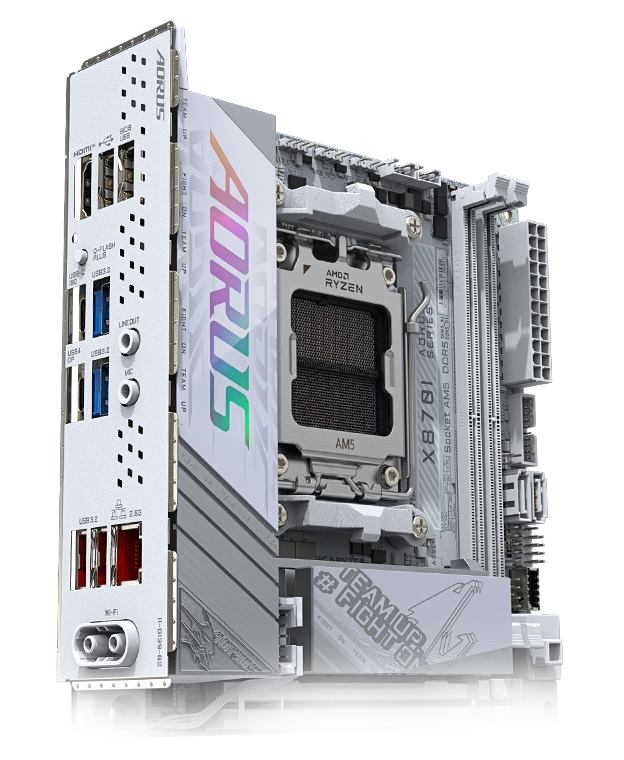
10. GIGABYTE X870I AORUS PRO ICE (Best Mini-ITX Motherboard)
For builders aiming for a Small Form Factor (SFF) PC build, the X870I AORUS PRO ICE is the best choice. It crams high-end features like PCIe 5.0 and a capable VRM into a tiny Mini-ITX form factor.
- Chipset: AMD X870
- Key Features: Capable 8+2+1-phase VRM sufficient for the 9800X3D, PCIe 5.0 x16 slot, and dual M.2 slots (one Gen 5).
- Best for: Compact gaming builds where space is at a premium but performance cannot be compromised.
Frequently Asked Questions (FAQs)
What is the best chipset for the Ryzen 7 9800X3D?
The X870E chipset is technically the best, offering dual PCIe 5.0 support and the most I/O, but X870 and B850 boards are excellent value choices.
Does the Ryzen 7 9800X3D need a high-end motherboard?
While a budget board can run it, a high-end board with strong VRMs and PCIe 5.0 is highly recommended to ensure stable power delivery and future-proofing, especially for gaming and potential overclocking.
Should I choose an X870E or B850 motherboard?
Choose X870E for maximum features, connectivity, and extreme overclocking, but choose B850 if you only need stable gaming performance and want to save money.
Does the Ryzen 7 9800X3D support DDR5 RAM?
Yes, the 9800X3D is built on the AM5 platform and only supports DDR5 RAM, benefiting significantly from higher speeds like 6000MT/s and above.
Can I use a previous-generation X670E motherboard?
Yes, X670E motherboards are fully compatible with the Ryzen 7 9800X3D after a potential BIOS update, and they still offer top-tier performance features.
Is a Mini-ITX motherboard a good choice for the 9800X3D?
Yes, a high-quality Mini-ITX X870/B850 board is viable for a compact build, as the 9800X3D’s efficiency means it doesn’t overly tax the smaller motherboard’s power delivery.